




02 — Chemistry & Pharma
Molecules, processes, materials
Chemistry I can run end to end — from the molecule to the production line.
Dermocosmetic actives, cannabinoid extraction and isolation, nanofluids without emulsifiers, and aviation biofuel from hemp-seed oil. Process rigor over claims — much of it validated at independent laboratories.
Chemistry, for me, is not a single bench — it is the through-line that connects formulation, extraction, materials and energy.
The work spans dermocosmetic molecular design, the molecular extraction of medicinal and industrial cannabis, nanofluid engineering, and the conversion of hemp-seed oil into green fuels. What ties it together is method: define the molecule, choose the process that isolates it cleanly, and prove the result on real equipment rather than on a slide.
I work at the molecular level and at the level of the plant that produces it. The same hands that design a peptide also build the automated machines that scale a material — so the chemistry and the process that delivers it are never two separate problems handed between two people.
Where a result is novel, I describe what it does and how it was validated, and hold the rest as proprietary. The hemp programme in particular I present as bio-derived industrial chemistry and R&D: a feedstock and a set of reactions, judged on process rigor, not on consumer-cannabis associations.
microfluidization pressure used to collide molecules and form nanofluids
particle size reached through shear and impact forces, without emulsifiers
Jet A-1 aviation-fuel yield from the HEFA fractional column
pure-hydrogen pressure in the HEFA reactor, at roughly 280 °C
Molecular design for anti-aging skin care.
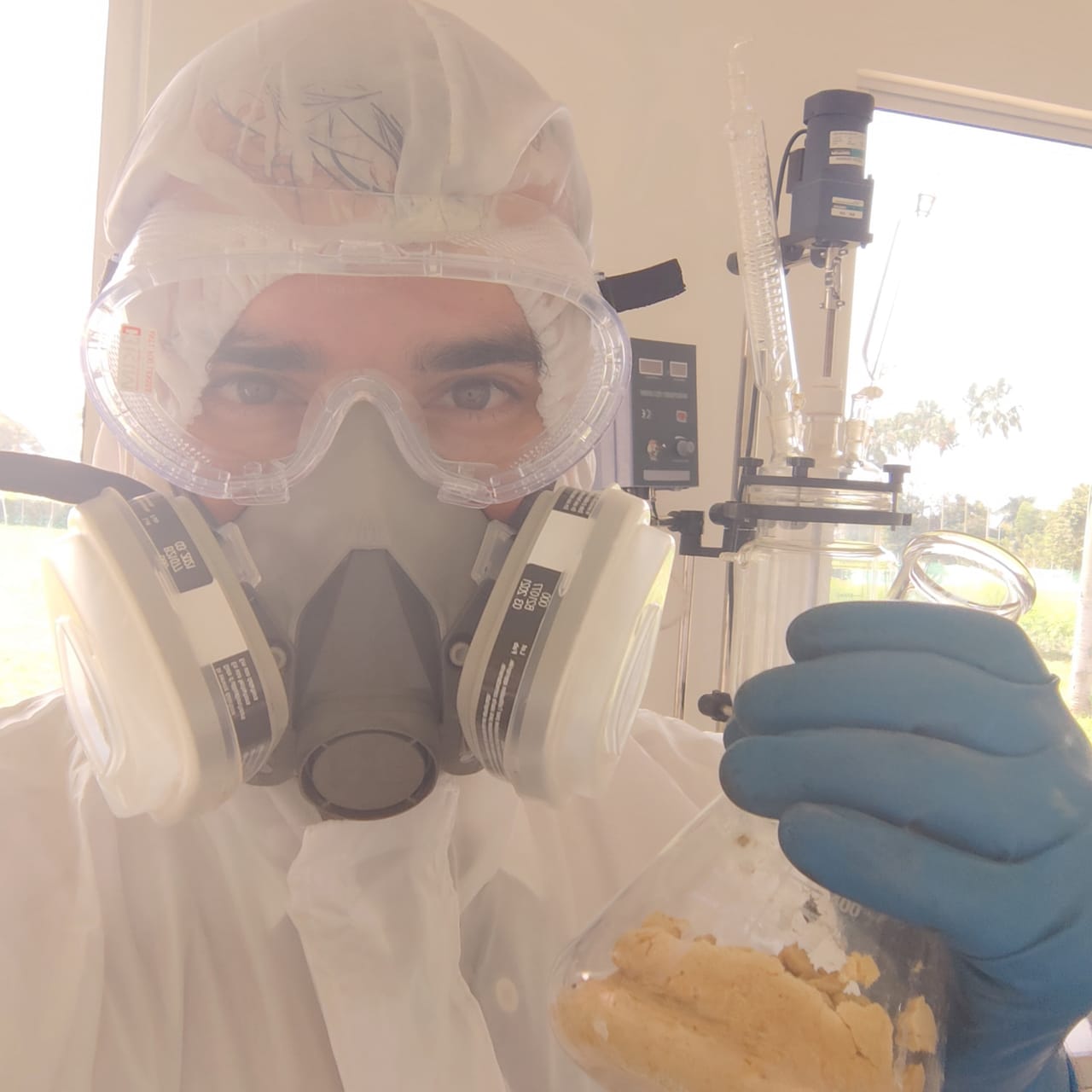
Formulation at the molecular level
Serums built from last-generation actives — and from peptides I work at the molecular level.
I have developed anti-aging facial serums and specialized dermocosmetic products using last-generation actives from DSM (Switzerland), Evonik (Germany), Stepan and Dow. The formulation discipline sits alongside the molecular work, not above it.
At the molecular level, the work includes specialized peptides — among them a cobra-venom-derived peptide and synthetic peptides designed to stimulate collagen production. The objective is a measurable mechanism of action, not a marketing claim.
- Last-generation actives: DSM, Evonik, Stepan, Dow
- Cobra-venom-derived peptide
- Synthetic peptides to stimulate collagen production
- Expert in formulation and pre-formulation
Into the Amazon for new molecules.
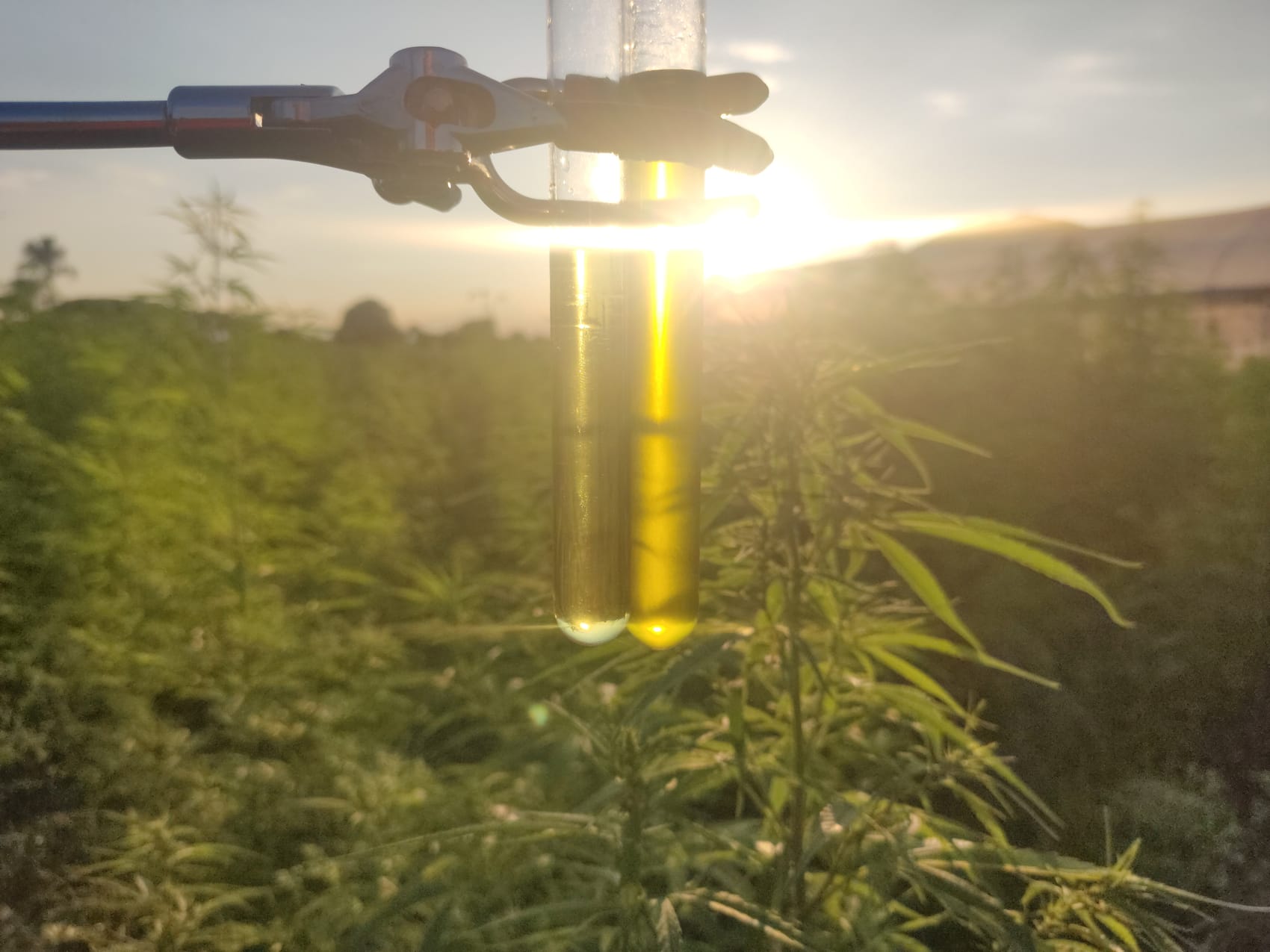
Ecuadorian Amazon → Colombia → Brazil
Spilanthol from Acmella oleracea — a natural mechanism that blocks muscular contraction.
I have done field research in the Ecuadorian Amazon, extracting plant materials that were later processed in Colombia and Brazil, searching for new molecules for dermocosmetics.
The key discovery was spilanthol, extracted from Acmella oleracea, an Amazonian plant. Spilanthol blocks muscular contraction — an advanced mechanism of action that acts like a natural botox — which makes it a direct, plant-derived route to anti-aging dermocosmetics.
- Field extraction in the Ecuadorian Amazon
- Processing in Colombia and Brazil
- Spilanthol from Acmella oleracea
- Blocks muscular contraction — a natural-botox mechanism
From serum to a European storefront — twelve years ago.
Twelve years ago I developed a commercial anti-aging serum and commercialized it myself in Europe. The chemistry was only half of it; the other half was the system that put the product in a customer's hands.
I built my own automated packaging line and an automated logistics line, and ran direct-response marketing through Facebook Ads and Google Ads. Orders shipped via DHL Express from Colombia and reached most European cities in at most five days. It is the same instinct that runs through everything here: the molecule and the machine that delivers it are one problem, owned end to end.
Five ways to pull a molecule out cleanly.
Expert in extracting CBD, CBG and CBN. The method depends on the target — throughput, purity, or recovering a fragile fraction such as terpenes. Each tab is a process I run on glass and steel.
Solvent extraction of cannabinoid fractions
Ethanol extraction is the workhorse for recovering CBD, CBG and CBN from biomass at scale. The solvent strips the target cannabinoids and accompanying compounds into solution, which is then concentrated for downstream separation.
It is forgiving, reproducible, and easy to instrument — the right first stage when the goal is throughput before purity.
- Recovers CBD, CBG and CBN fractions from plant material
- Concentrated by rotary evaporation before distillation
- Chosen when throughput precedes final purity
Ultra-cold extraction at −40 °C
Ice-quick extraction runs in ultra-cold systems held at −40 °C. Operating that cold suppresses the co-extraction of waxes, lipids and chlorophyll, so the crude that comes off is cleaner and needs less remediation later.
It trades some speed for a cleaner starting material — useful when the end target is an isolate rather than a broad extract.
- Ultra-cold system held at −40 °C
- Suppresses waxes, lipids and chlorophyll at the source
- Cleaner crude, less downstream remediation
Molecular separation and isolation
Short-path distillation separates and isolates molecules by their distinct boiling behavior under deep vacuum, where the distance from evaporator to condenser is short enough to protect heat-sensitive compounds.
I use it to isolate cannabinoid fractions and to recover terpenes as a separate stream, rather than losing them to heat.
- Vacuum molecular separation of cannabinoid fractions
- Terpenes recovered as a dedicated stream
- Short evaporator-to-condenser path protects heat-sensitive molecules
Effective molecular isolation
Flash chromatography resolves closely related molecules that distillation alone leaves overlapping. Driving the mobile phase under pressure through the column separates fractions quickly and cleanly.
It is the step that turns a good separation into an effective isolation when two species sit very close together.
- Pressure-driven column separation
- Resolves molecules distillation leaves overlapping
- Used for effective, targeted isolation
Crystallization of CBD and related molecules
Producing ultrapure crystals from a molecule such as CBD is a sequence, not a single operation: distillation to concentrate the target, then purification, washing and filtration to drive out the remaining impurities.
Each pass tightens the result. The output is a crystalline solid clean enough to specify by assay.
- Distillation → purification → washing → filtration
- Yields ultrapure crystalline CBD
- Specified by assay, not appearance
Colliding molecules into a single stable composition.
Microfluidizer · up to 45,000 PSI
Nanofluids without emulsifiers — oil-based and water-based molecules coexisting in one phase.
I work nanofluid processes for pharma using high-pressure microfluidization at up to 45,000 PSI. The fluid is forced through the equipment — a microfluidizer — so molecules collide at high velocity through shear and impact forces, reaching particle sizes around 50 microns.
The result converts fluids into nanofluids in which oil-based and water-based molecules coexist, stable, in a single composition without emulsifiers, fully soluble in aqueous media. That opens possibilities across pharma, food and dermocosmetics, and it pairs directly with my work in formulation and pre-formulation.
- Microfluidization up to 45,000 PSI
- Shear and impact forces → ~50 µm particle size
- No emulsifiers; fully soluble in aqueous media
- Applications across pharma, food, dermocosmetics
Oil and water in one stable phase, fully soluble, with no emulsifier holding them together — that is the part people do not expect.
Liquids into pharmaceutical powders, on real hardware.
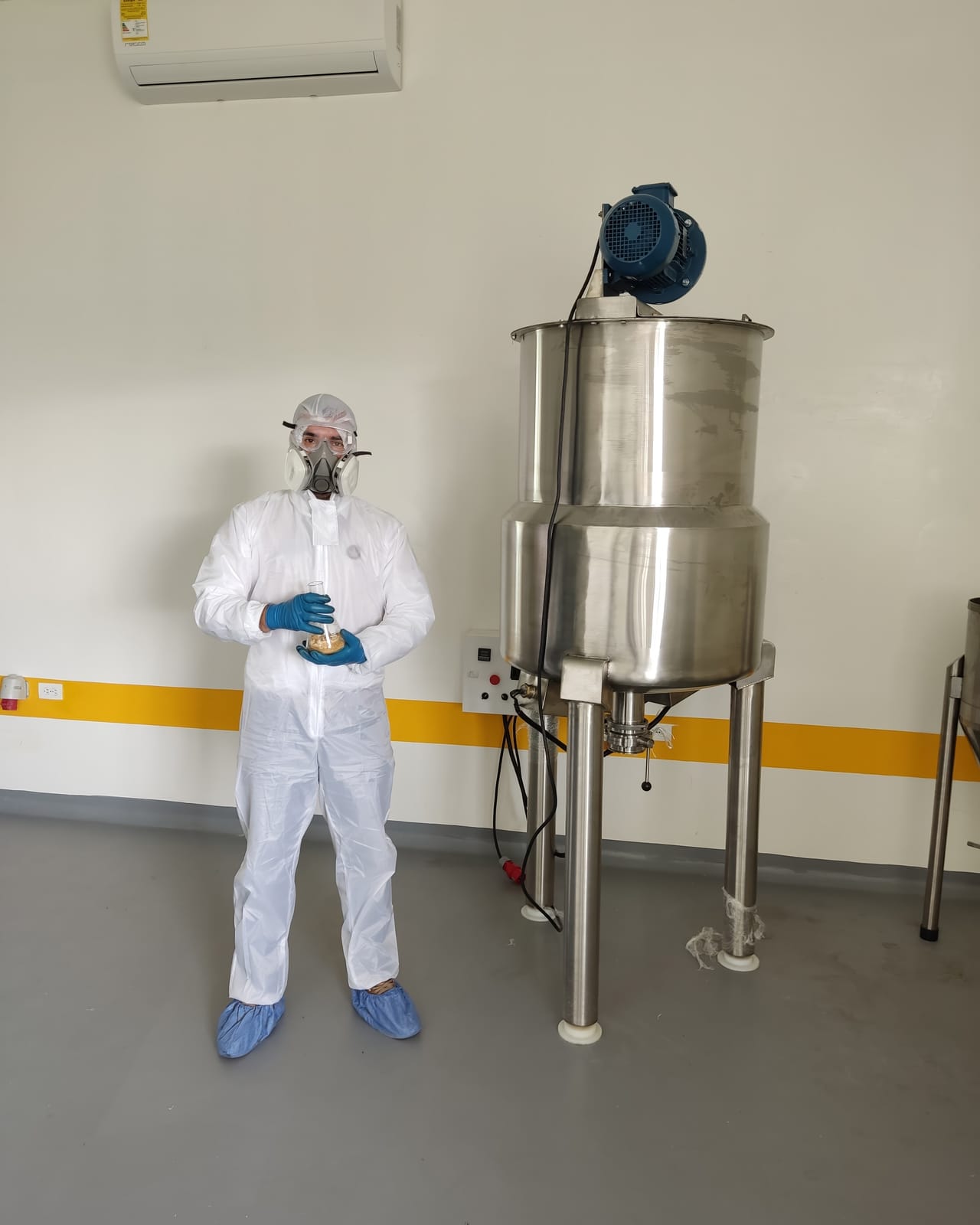
Spray-dry conversion
From viscous fluid to a free-flowing pharmaceutical powder.
Spray-dry conversion turns liquid, viscous or semi-liquid molecules into pharmaceutical powders — the format that makes a molecule easy to dose, store and integrate into a downstream formulation.
All of this runs on equipment I operate directly: glass and steel chemical reactors, rotary evaporators, short-path distillers and thin-film distillation. The unit operations above are not theory — they are the daily work on this hardware.
- Glass and steel chemical reactors
- Rotary evaporators
- Short-path distillers
- Thin-film distillation
Jet A-1 from 100% hemp-seed oil.
The work I am most invested in: producing green fuels — diesel, Jet A-1, gasoline and natural gas — from 100% pure hemp-seed oil.
The route is HEFA — hydrotreatment of fatty acids. Hemp-seed oil enters a chemical reactor charged with molybdenum and platinum catalysts at roughly 280 °C and about 2,800 PSI of pure hydrogen, producing long-chain fatty-acid bases. From there the process runs through deoxygenation, vacuum distillation and finally fractional distillation.
The fractional column is where it pays off: it isolates the phases — gasoline, diesel, and most importantly up to 75% yield of Jet A-1 aviation fuel — with minor gas fractions lost in the vacuum stage. The work has been tested at Cornell University in the United States and at the Intertek and Proacem laboratories in Colombia. Some methods I hold as proprietary.
HEFA — hemp-seed oil to aviation fuel
- 01 Feedstock 100% pure hemp-seed oil as the single bio-derived input.
- 02 Hydrotreatment (HEFA) Reactor with molybdenum and platinum catalysts at ~280 °C and ~2,800 PSI of pure hydrogen.
- 03 Fatty-acid bases Hydrotreatment produces long-chain fatty-acid bases.
- 04 Deoxygenation Oxygen is stripped from the chains to give hydrocarbon-grade material.
- 05 Vacuum distillation Distillation under vacuum; minor gas fractions are lost at this stage.
- 06 Fractional distillation The fractional column isolates phases: gasoline, diesel, and up to 75% Jet A-1.
The feedstock
One bio-derived input, four fuel phases out.
Starting from a single feedstock — pure hemp-seed oil — the column separates a full fuel slate. The headline is the Jet A-1 fraction, but the diesel, gasoline and gas phases come off the same process.
Presented as bio-derived industrial chemistry: a feedstock, a reaction, a separation, and an independent validation. The numbers below are the operating envelope.
HEFA process — operating envelope
- Feedstock
- 100% hemp-seed oil
- Process
- HEFA hydrotreatment
- Catalysts
- Molybdenum + Platinum
- Reactor temperature
- ~280 °C
- Hydrogen pressure
- ~2,800 PSI (pure H₂)
- Jet A-1 yield
- up to 75%
- Co-products
- Gasoline · Diesel · Natural gas
- Validation
- Cornell · Intertek · Proacem
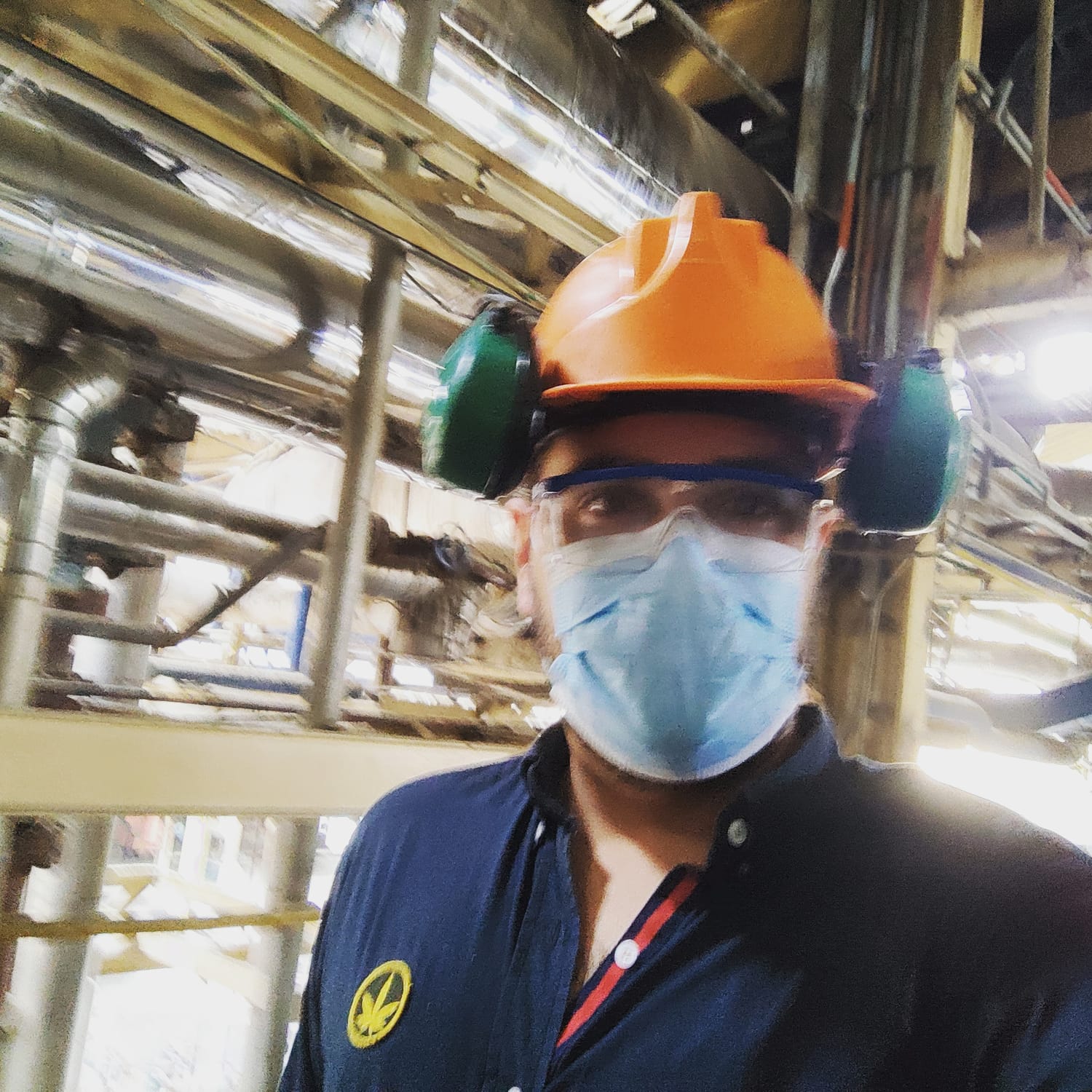
Process operation, in PPE.
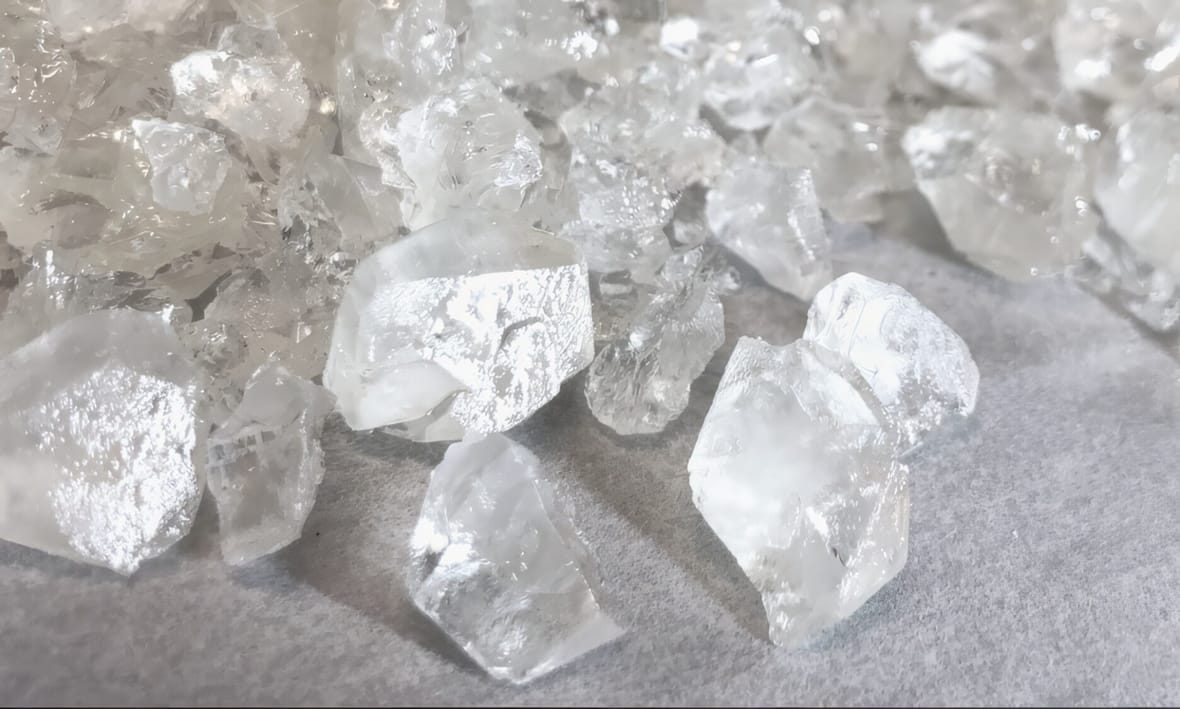
The same feedstock, turned into materials and energy.
Beyond fuel, hemp is a materials platform. The R&D here treats the plant as an industrial input — fiber, kernel, seed oil — and builds products and the machines that produce them. Several of these required designing and building automated paper-production machines around PLC, HMI and SCADA control, where the chemistry and the automation are one project.
High-quality papers
Papers for domestic use and for electoral-machine paper, produced on automated machines I designed and built around PLC, HMI and SCADA control.
Bioplastics & PLA
Bioplastics from short hemp fiber, and PLA (polylactic acid) produced 100% from industrial hemp.
Food biogels
Biogels from hemp-seed oil: edible, fully biodegradable, high-protein fishing lures for the global fishing industry.
Infant nutrition
Infant-nutrition products from hemp palmiste (kernel) and hemp-seed oil, high in omega 3 and omega 6.
Vegetable charcoal
Special vegetable charcoal up to 8,000 BTU/lb with significantly lower emissions than standard charcoal.
Hemp pellets
Hemp pellets tested in industrial boilers, extending the energy work beyond charcoal.
What it takes to build a serum around an active.
Formulation is the visible half of dermocosmetic work; pre-formulation is the half that decides whether the visible half survives.
Before a single emulsion is mixed, the molecule has to be understood: how it dissolves, how it partitions between phases, how it responds to heat, light and pH, and how it behaves over time. That study is pre-formulation, and I run it first because a finished product inherits every property the active brought with it.
Only then does sourcing matter. Last-generation actives from DSM, Evonik, Stepan and Dow are well-characterized inputs with documented mechanisms — the discipline is selecting the right one for a defined mechanism of action and combining several without antagonism or instability. The peptide work and the spilanthol route give two independent mechanisms to design around, rather than one ingredient to lean on.
Knowing the molecule before the formula
Pre-formulation is the study that comes before the product: solubility, stability, partition behavior, and how an active responds to heat, light and pH. I run it first because a formula is only as good as its understanding of the molecule it carries.
For a dermocosmetic active the questions are concrete — does it stay where it is meant to act, does it survive the emulsion, does it degrade on the shelf. Answering them on the bench is cheaper than discovering them in a finished batch.
- Solubility and partition behavior mapped first
- Stability against heat, light and pH
- Compatibility with the intended carrier system
Last-generation actives, used deliberately
Working with actives from DSM, Evonik, Stepan and Dow means inheriting well-characterized raw materials with known mechanisms. The discipline is not in having access to them — it is in choosing the right one for a defined mechanism of action and combining them without antagonism.
I treat each active as a documented input with a dossier, not a label on a marketing claim. The formula is built around what the molecule actually does.
- DSM · Evonik · Stepan · Dow as characterized inputs
- Selection driven by mechanism, not marketing
- Combinations checked for antagonism and stability
Peptides at the molecular level
The peptide work includes a cobra-venom-derived peptide and synthetic peptides designed to stimulate collagen production. Peptides are short amino-acid sequences whose activity is bound to their exact sequence and folding, so handling and stabilizing them is a large part of the work.
The objective is a measurable mechanism — a peptide that signals the right pathway — rather than a generic claim that something is anti-aging.
- Cobra-venom-derived peptide
- Synthetic collagen-stimulating peptides
- Sequence-specific handling and stabilization
A plant-derived alternative mechanism
Spilanthol, extracted from Acmella oleracea, blocks muscular contraction — a mechanism that behaves like a natural botox and gives a plant-derived route to the same anti-aging objective the peptides target by a different path.
Having two mechanisms — a signaling peptide and a contraction-blocking botanical — means a formula can be designed around what the skin actually needs rather than around a single ingredient.
- Acmella oleracea as the botanical source
- Blocks muscular contraction (natural-botox mechanism)
- Complements the peptide route rather than replacing it
Why each extraction method earns its place.
The five methods on the bench are not interchangeable — each answers a different question. Ethanol extraction answers throughput: it strips CBD, CBG and CBN into solution quickly and reproducibly, and the crude is concentrated by rotary evaporation. Ice-quick answers cleanliness at the source: held at −40 °C, it suppresses the waxes, lipids and chlorophyll that would otherwise have to be remediated later.
Distillation answers separation by volatility, and chromatography answers the cases distillation leaves overlapping. Crystallization answers the final purity. Read top to bottom, the table is a decision tree: pick the entry whose question matches the target.
Sequence over single steps
Purity is built in passes, not in one operation.
No single step delivers an isolate. Ethanol or ice-quick gives a crude; rotary evaporation concentrates it; distillation separates by boiling behavior; chromatography resolves what is left overlapping; crystallization fixes the result as an ordered solid. Each pass tightens the previous one.
Choosing where to stop is part of the method — a broad extract and an isolate are different products, and the process is run to whichever the target demands.
- Crude → concentrate → separate → resolve → crystallize
- Each step tightens, none works alone
- Stop point chosen by the target product
Separation toolkit — method by question answered
- Ethanol extraction
- Bulk recovery — CBD, CBG, CBN
- Ice-quick
- −40 °C, suppresses waxes and lipids
- Rotary evaporation
- Solvent removal, crude concentration
- Short-path distillation
- Vacuum molecular separation
- Thin-film distillation
- Continuous, short heat exposure
- Flash chromatography
- Resolves close-boiling species
- Crystallization
- Wash and filter to ultrapure solid
A column drawn, not photographed.
Fractional distillation
How a fractional column splits one stream into many.
A fractional column separates a mixture by boiling point. Heat at the base drives vapor upward; as it rises it cools, and each component condenses at the tray matching its boiling temperature. The lightest fractions leave at the top, the heaviest at the bottom, and the intermediate cuts are drawn off in between.
Short-path and thin-film distillation apply the same principle under deep vacuum, where lowered boiling points and a short evaporator-to-condenser path keep heat-sensitive molecules — cannabinoids, terpenes — from degrading. The same column physics that splits a fuel slate also isolates a cannabinoid fraction.
- Separation by boiling point, tray by tray
- Light fractions top, heavy fractions bottom
- Vacuum and short paths protect fragile molecules
Short-path distillation — operating principle
- Principle
- Separation by boiling point
- Environment
- Deep vacuum, lowered boiling points
- Path length
- Short evaporator-to-condenser distance
- Heat exposure
- Minimized to protect actives
- Terpene stream
- Recovered separately, not lost to heat
- Output
- Isolated cannabinoid fractions
From distillate to a solid you can specify.
Ultrapure crystals are the end of the separation chain, not a shortcut around it. The distillate is already high in the target cannabinoid, but it still carries closely related molecules; crystallization exploits the fact that the target leaves solution as an ordered lattice while most impurities stay dissolved in the mother liquor.
Washing the lattice removes that residual liquor, and filtration separates and dries the solid. The result is specified by assay, not by appearance — a number on a certificate rather than a description of a powder.
CBD crystallization — distillate to ultrapure solid
- 01 Distillation Concentrate the target cannabinoid into a high-purity distillate.
- 02 Purification Drive out the closely related impurities the distillate still carries.
- 03 Crystallization Bring the molecule out of solution as an ordered crystalline solid.
- 04 Washing Wash the crystal lattice to remove residual mother liquor.
- 05 Filtration Separate and dry the crystals; specify the result by assay.
Specified, not described
The crystal is the proof that the chain worked.
A clean crystalline solid is hard to fake — it is the visible consequence of every earlier step having done its job. If the distillation or purification was loose, the lattice carries it forward as occluded impurity.
That is why I treat the crystal as a checkpoint: it either meets assay or it sends the work back up the chain to find where purity was lost.
What happens inside the interaction chamber.
Shear and impact at up to 45,000 PSI
Two streams, one collision, a single stable phase.
Inside a microfluidizer the feed is split and forced through fixed-geometry microchannels at up to 45,000 PSI. The streams accelerate, then collide head-on in an interaction chamber; the shear and impact forces at that velocity break the dispersed phase down to particle sizes around 50 microns.
Because the size reduction is mechanical, oil-based and water-based molecules can be brought into one composition that stays stable and fully soluble in aqueous media — without an emulsifier holding them together. That is the property that makes the result useful across pharma, food and dermocosmetics.
- Feed split, pressurized, collided head-on
- Mechanical shear and impact → ~50 µm
- Stable single phase, no emulsifier needed
The pressure does the work an emulsifier usually does — which is why the phase stays single and soluble once the emulsifier is no longer there to remove.
Two towers, drawn from the inside.
Two of the most important unit operations here are towers, and both are easier to read as a diagram than as a photograph. Spray-dry conversion turns a liquid or viscous molecule into a free-flowing pharmaceutical powder; the HEFA reactor and column turn hemp-seed oil into a fuel slate. The schematics below show how each one moves material from top to bottom.
Spray-dry conversion
A fine mist meets hot gas and falls as powder.
In a spray-dry tower the liquid feed is atomized into a fine mist at the top and meets a stream of hot drying gas. The solvent flashes off almost instantly, and what falls to the collection cone is a dry, free-flowing powder — the format that makes a molecule easy to dose, store and carry into a downstream formulation.
The short residence time matters: the droplet dries before its core ever reaches the gas temperature, which is what lets heat-sensitive molecules survive the operation.
- Feed atomized to a fine mist at the top
- Hot gas flashes off the solvent
- Free-flowing powder collected at the cone
HEFA reactor flow
Oil and hydrogen in, a fuel slate out.
The HEFA flow starts with hemp-seed oil and pure hydrogen entering a reactor charged with molybdenum and platinum catalysts at roughly 280 °C and about 2,800 PSI. Hydrotreatment produces long-chain fatty-acid bases; deoxygenation strips the oxygen to leave hydrocarbon-grade material.
Vacuum distillation removes the minor gas fractions, and the fractional column splits the remainder into gasoline, diesel and up to 75% Jet A-1. The diagram traces that path from the two inputs at the left to the four phases at the right.
- Oil + pure H₂ into a Mo/Pt reactor
- Hydrotreat → deoxygenate → vacuum distill
- Fractional column splits four phases
Equipment — the hardware behind the unit operations
- Reactors
- Glass and stainless-steel
- Concentration
- Rotary evaporators
- Distillation
- Short-path and thin-film
- Powder conversion
- Spray-dry
- Nanofluid stage
- Microfluidizer, up to 45,000 PSI
- HEFA reactor
- Mo + Pt catalysts, ~280 °C, ~2,800 PSI H₂
- Operation
- Operated directly, in full PPE
One method, followed across four domains.
Field, bench, market, process, energy — the same discipline, applied to whatever the molecule demanded next.
Read in sequence, the work is one continuous method rather than a list of separate projects. It starts in the field with bioprospecting, moves to the bench for formulation and peptide work, reaches a market through a serum I shipped end to end, scales into extraction and nanofluid processes, and arrives at energy with the HEFA programme.
What carries across all of it is the refusal to split the molecule from the machine that delivers it.
- Field Bioprospecting in the Ecuadorian Amazon Extraction of plant materials in the field, later processed in Colombia and Brazil in search of new dermocosmetic molecules — the work that surfaced spilanthol from Acmella oleracea.
- Bench Formulation and molecular design Dermocosmetic actives and peptides worked at the molecular level, with pre-formulation running ahead of every product.
- Market A serum shipped end to end A commercial anti-aging serum developed, packaged on an automated line I built, and sold direct into Europe — the molecule and the machine owned as one problem.
- Process Extraction, nanofluids and powders Cannabinoid extraction and isolation, microfluidization into nanofluids without emulsifiers, and spray-dry conversion into pharmaceutical powders, all on equipment I operate.
- Energy Hemp-seed oil into green fuels The HEFA programme — a single bio-derived feedstock turned into a full fuel slate, with a Jet A-1 fraction validated at independent laboratories.
The principles underneath the processes.
The processes change with the target; the principles do not. These are the rules I apply whether the work is a dermocosmetic active, a cannabinoid isolate, a nanofluid or a fuel fraction — the part that makes the chemistry repeatable rather than incidental.
Define the molecule first
Pre-formulation and characterization come before any formula or process choice. The molecule sets the constraints; the process is chosen to fit them.
Choose the cleanest separation
Throughput, purity or a fragile fraction — the target decides whether the right tool is ethanol, ice-quick, distillation, chromatography or crystallization.
Protect what is fragile
Deep vacuum, short paths and low heat exposure exist so heat-sensitive molecules — terpenes, actives — survive the process intact.
Prove it on real hardware
Unit operations are run on glass and steel I operate directly, and novel results are validated at independent laboratories rather than asserted.
Own molecule and machine together
The same hands that design an active build the automated line that scales it, so chemistry and process are never handed between two people.
Hold the rest as proprietary
Where a result is novel I describe what it does and how it was validated, and keep specific methods proprietary.
Define the molecule, choose the process that isolates it cleanly, and prove the result on real equipment — everything else is detail.
Open to the right work
If your problem starts with a molecule and ends on a production line, that is the work I want.
If you are holding a problem that doesn't fit inside one field, that is the conversation I want.